FERC has a clear mandate under Order 1000 to require competitive bidding for new transmission projects. For too long, monopoly utilities have avoided competition through loopholes and exemptions. It’s time for FERC to enforce the law and restore competition that protects American.
FERC Enforcement
FERC has a clear mandate under Order 1000 to require competitive bidding for new transmission projects. For too long, incumbent monopoly utilities have skirted these rules through exemptions and loopholes. It’s time for FERC to enforce the law and restore fair competition that protects American ratepayers.
Department of Justice and Federal Trade Commission Joint Filing
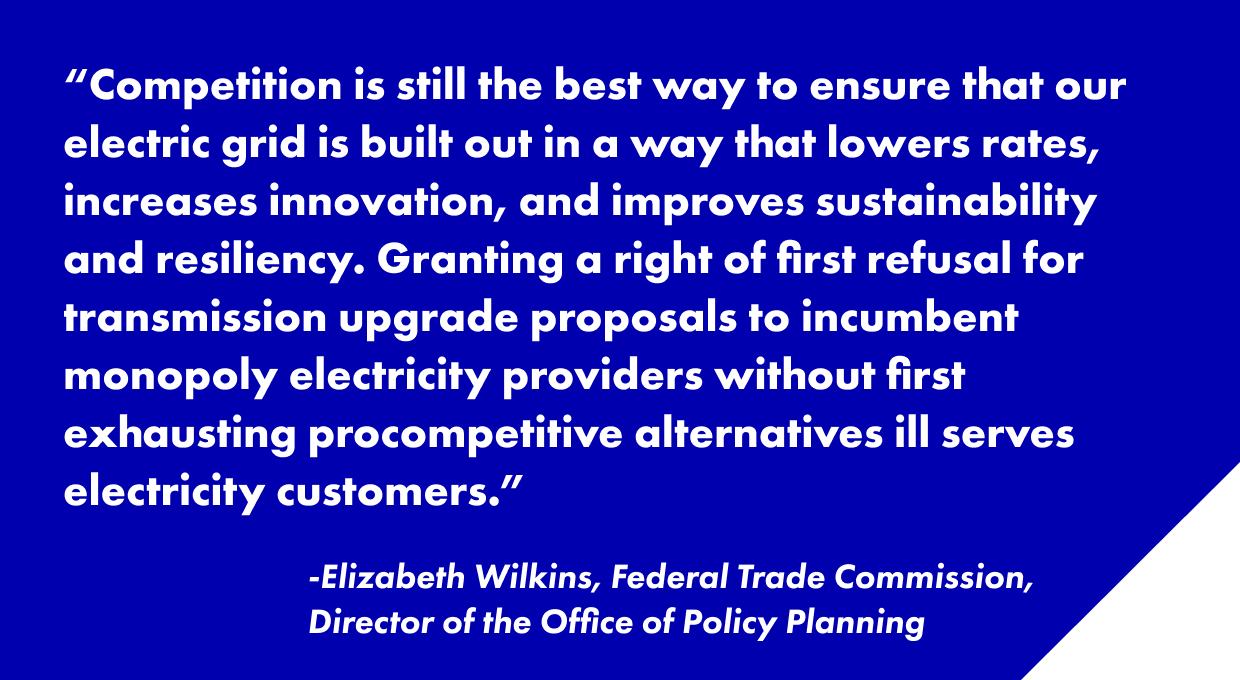
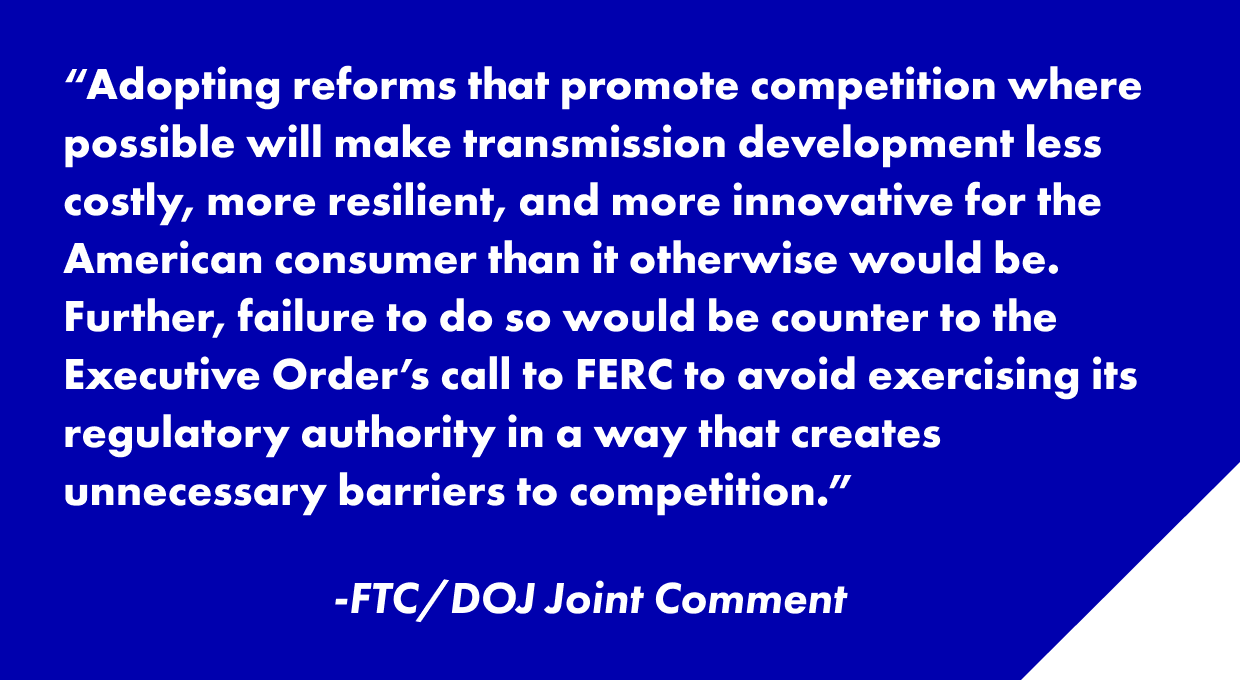
In response to the Notice of Proposed Rulemaking for Order 1920, the Federal Trade Commission and the Department of Justice submitted a joint comment to FERC urging it not to restore a right of first refusal for monopoly utilities.
Benefits of Competition
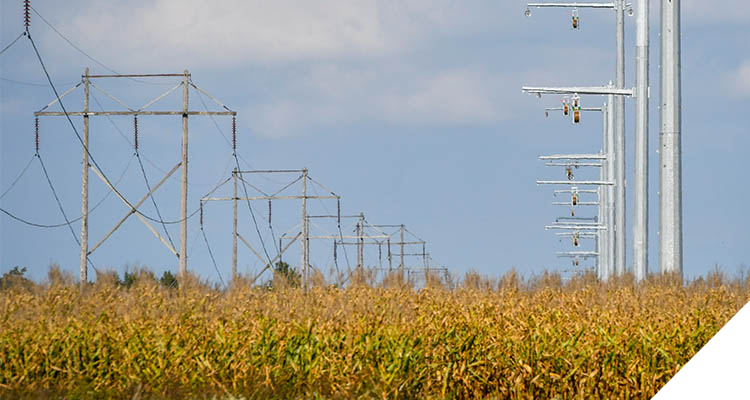
Electricity transmission competition leads to lower costs, accountability, increased innovation, and a more efficient, reliable, and resilient grid.
Competitively bid transmission projects reduce costs to consumers by up to 40 percent, according to The Brattle Group. When FERC enforces competition, families and businesses save money, projects are built faster, and the grid becomes more efficient and reliable
Competition at Work
Empire State Line
Location: Western New York
Year: Energized in mid-2022
Operator: New York Independent System Operator (NYISO)
Builder: NextEra Energy Transmission New York
Overview:
The Empire State Line project upgraded the energy transmission system that serves Western New York. A 20-mile upgrade developed through open competition saved consumers $500 million.
Overview: PJM received 26 proposals from seven entities, with proposals ranging from $100 million to over $1 billion. PJM awarded the project to LS Power, which offered more comprehensive cost containment with fewer exceptions than other proposals. The project was completed in 2020.
Read How the Federal Energy Regulatory Commission’s Failure to Enforce Transmission Competition Will Lead to Decades of Electricity Price Inflation for American Consumers.